Featured
The Genuine Price of Neglecting Debt: Exactly How Expert Therapy Providers Are Changing Financial Recovery
Table of Contents
- – The Growing Need for Debt Mercy Solutions
- – Insolvency Therapy: The Misunderstood Safeguard
- – Contrasting Your Financial Debt Relief Options
- – What Establishes Nonprofit Counseling Apart
- – Indication of Predative Financial Debt Relief ...
- – Taking the Initial Step Toward Recuperation
- – The Course Forward
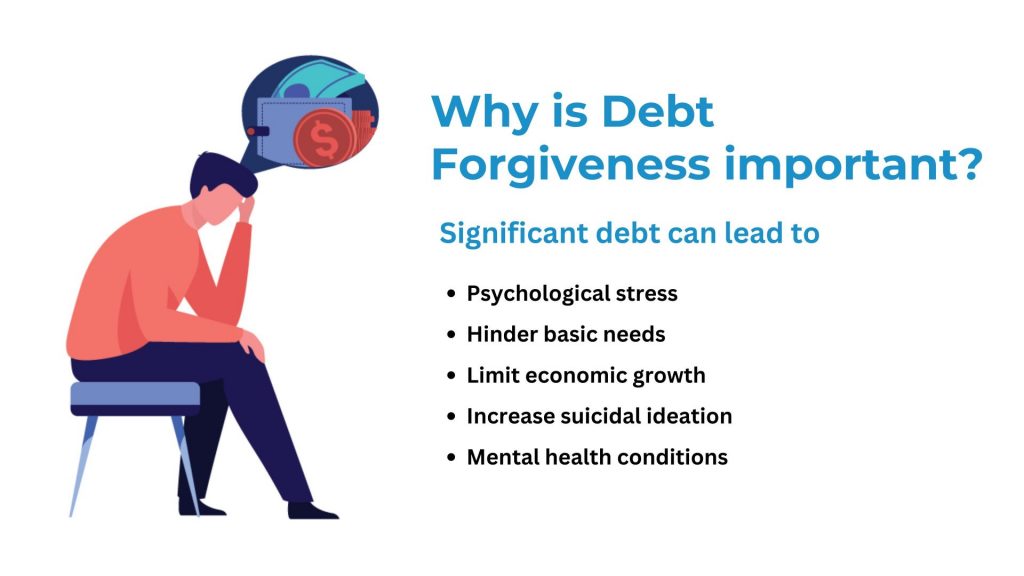
Monetary anxiety has ended up being a specifying quality of modern-day American life. With overall charge card financial debt surpassing $1.21 trillion and the average cardholder owing greater than $6,500, millions of people find themselves entraped in cycles of minimal payments and worsening interest. When charge card rates of interest hover around 23%, even moderate equilibriums can swell into frustrating burdens within months.
For those drowning in the red, the concern isn't whether to look for aid-- it's locating the appropriate sort of aid that will not make issues worse.
The Growing Need for Debt Mercy Solutions
Debt mercy has actually become one of one of the most searched monetary topics on-line, and forever reason. The idea of settling financial obligations for much less than the complete quantity owed deals real hope to people who see no practical course to paying their equilibriums completely.
The process commonly works like this: when bank card accounts go unpaid for 120 days or even more, lenders typically charge off the debt. At this stage, they may accept minimized negotiations to recoup a minimum of a part of what's owed. Effective negotiations can minimize equilibriums by 30% to 50%, depending on the financial institution and your shown financial hardship.
Financial obligation mercy isn't free cash. Resolved accounts appear on credit rating reports as "" paid less than full balance,"" which influences your rating. Additionally, forgiven amounts exceeding $600 might be reported to the internal revenue service as taxable income. Understanding these compromises before seeking settlement is vital.
Insolvency Therapy: The Misunderstood Safeguard
Bankruptcy lugs substantial preconception, yet it remains a legitimate lawful device made to give overwhelmed individuals an authentic new beginning. What lots of people don't realise is that government regulation needs two counseling sessions before and after filing-- and these sessions exist especially to guarantee you're making an informed choice.
Pre-bankruptcy credit counseling entails a thorough review of your revenue, financial obligations, and costs. Licensed therapists existing options you might not have thought about, including financial obligation monitoring programs or hardship settlements. This isn't about dissuading bankruptcy; it has to do with confirming it's truly your best choice.
Post-bankruptcy borrower education and learning prepares you for monetary success after discharge. You'll find out budgeting strategies, conserving methods, and debt restoring comes close to developed to avoid future financial troubles.
Organisations like APFSC deal both required programs, with costs around $19.99 per session unless you get approved for hardship waivers. Their licensed therapists supply same-day certificates, and sessions generally run 60 to 90 mins. This availability issues when you're currently worried about finances.
Contrasting Your Financial Debt Relief Options
Understanding the landscape of financial debt relief helps you make informed decisions. Each strategy lugs unique benefits and drawbacks.
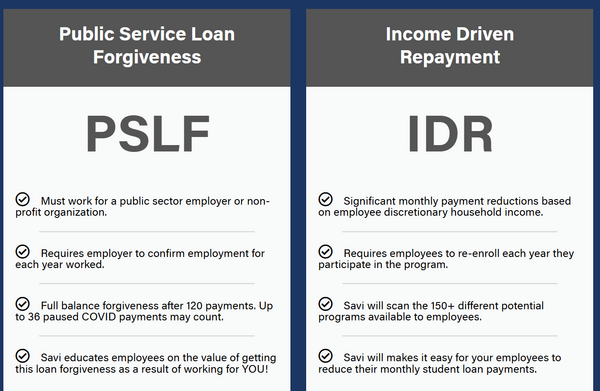
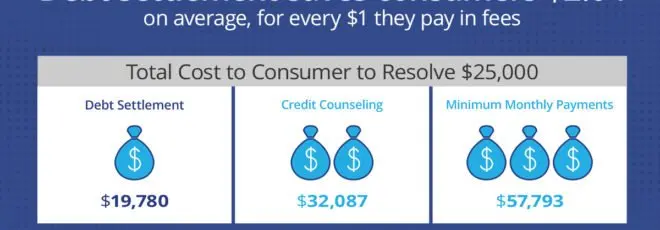
Financial Obligation Management Programs combine numerous unprotected financial debts right into solitary monthly settlements. Counselors bargain with lenders to possibly reduce rate of interest without calling for new loans. Most clients full these programs within 3 to five years. The main benefit is paying debts in complete while minimizing total interest paid.
Debt Settlement negotiates decreased payback amounts, commonly 30% to 50% much less than owed. This technique needs stopping settlements to lenders while collecting settlement funds, which damages credit rating during the process. Results differ based on creditor determination and your demonstrated difficulty.
Insolvency offers court security while eliminating or restructuring debts. Chapter 7 sells off certain assets to discharge unsecured financial obligations promptly. Chapter 13 develops three-to-five-year payment prepare for those with normal revenue. Personal bankruptcy remains on debt reports for seven to ten years but uses the most detailed new beginning.
Credit score Counseling supplies education and assistance without always registering in formal programs. Certified counselors evaluate your complete economic photo and recommend ideal next steps, which could include any one of the above alternatives.

What Establishes Nonprofit Counseling Apart
The difference between nonprofit and for-profit financial obligation relief companies matters immensely. Nonprofit agencies like those certified by the National Structure for Credit Report Counseling (NFCC) run under strict moral guidelines and charge policies. Their therapists undertake extensive qualification and should recertify every two years.
For-profit debt negotiation firms, on the other hand, might charge costs ranging from 15% to 25% of enrolled debt balances. Some use aggressive sales strategies and make impractical assurances about outcomes. The Consumer Financial Defense Bureau has recorded many issues regarding predatory methods in this industry.
APFSC operates as a nonprofit therapy firm, supplying totally free financial obligation administration assessments and regulated costs for continuous solutions. Their HUD-approved real estate therapists include value for those dealing with repossession alongside general financial debt concerns. Providers are available in English, Spanish, and Portuguese, expanding accessibility to underserved areas.
Study sustains the effectiveness of nonprofit therapy. A study commissioned by the NFCC found that credit score counseling customers lowered rotating financial debt by $3,600 even more than comparison teams during the 18 months following their sessions. Nearly 70% of participants reported improved cash management and greater financial self-confidence.
Indication of Predative Financial Debt Relief Provider
Not all financial debt relief business have your best rate of interests in mind. Acknowledging warnings secures you from making a difficult scenario even worse.
Beware of firms that guarantee particular outcomes. No reputable solution can assure exact negotiation percentages or timeline warranties due to the fact that results depend on specific lenders and circumstances.
Prevent any kind of business requiring huge in advance costs prior to providing solutions. Legit nonprofit therapy supplies complimentary initial examinations, and for-profit negotiation business are legitimately restricted from accumulating fees till they successfully work out at the very least one debt.
Concern anyone advising you to quit interacting with lenders completely without discussing the effects. While calculated communication pauses occasionally sustain arrangements, full avoidance can result in lawsuits, wage garnishment, and additional damages.
Legitimate firms explain all options truthfully, consisting of options that could not include their paid solutions. If a firm presses just one solution regardless of your scenario, seek guidance in other places.
Taking the Initial Step Toward Recuperation
Financial recovery begins with honest analysis. Gather your most recent statements for all debts, calculate your overall responsibilities, and evaluate your sensible regular monthly payment capacity. This details develops the foundation for any kind of efficient counseling session.
Consider scheduling free consultations with multiple nonprofit firms before committing to any type of program. Compare their suggestions, cost frameworks, and interaction designs. The best therapy relationship ought to feel supportive instead of pressing.
Organisations like APFSC offer on the internet chat, phone examinations, and thorough intake procedures made to understand your one-of-a-kind scenario prior to recommending options. Their financial debt administration calculator aids you imagine potential timelines and savings before enlisting.
The Course Forward
Overwhelming debt does not define your future-- however overlooking it will. Whether financial debt mercy, personal bankruptcy therapy, or organized financial obligation management makes feeling for your situation relies on elements unique to your conditions.
Professional advice from certified nonprofit counselors brightens alternatives you may never ever find individually. These solutions exist especially to help individuals like you browse complicated monetary difficulties without predatory fees or impractical promises.
The ordinary American having problem with financial debt waits far also lengthy before seeking aid, permitting rate of interest to substance and options to slim. On a monthly basis of hold-up costs money and prolongs your recuperation timeline.
The Role of Mental Health in Financial Stress & How to CopeYour first discussion with a qualified counselor expenses nothing however could change whatever. Financial flexibility isn't booked for the lucky-- it's offered to any individual happy to take that initial action towards understanding their options and dedicating to a realistic plan.

Table of Contents
- – The Growing Need for Debt Mercy Solutions
- – Insolvency Therapy: The Misunderstood Safeguard
- – Contrasting Your Financial Debt Relief Options
- – What Establishes Nonprofit Counseling Apart
- – Indication of Predative Financial Debt Relief ...
- – Taking the Initial Step Toward Recuperation
- – The Course Forward
Latest Posts
The Facts About Actions to Take Once How to Build an Emergency Fund While Paying Off Debt Uncovered

Fascination About Unsecured Debt Why Low-Interest Loans Are a Lifeline for Veterans Navigating Civilian Life Made Simple
What Does Staying Safe Against Unethical Operators Mean?
More
Latest Posts
The Facts About Actions to Take Once How to Build an Emergency Fund While Paying Off Debt Uncovered
Fascination About Unsecured Debt Why Low-Interest Loans Are a Lifeline for Veterans Navigating Civilian Life Made Simple
What Does Staying Safe Against Unethical Operators Mean?